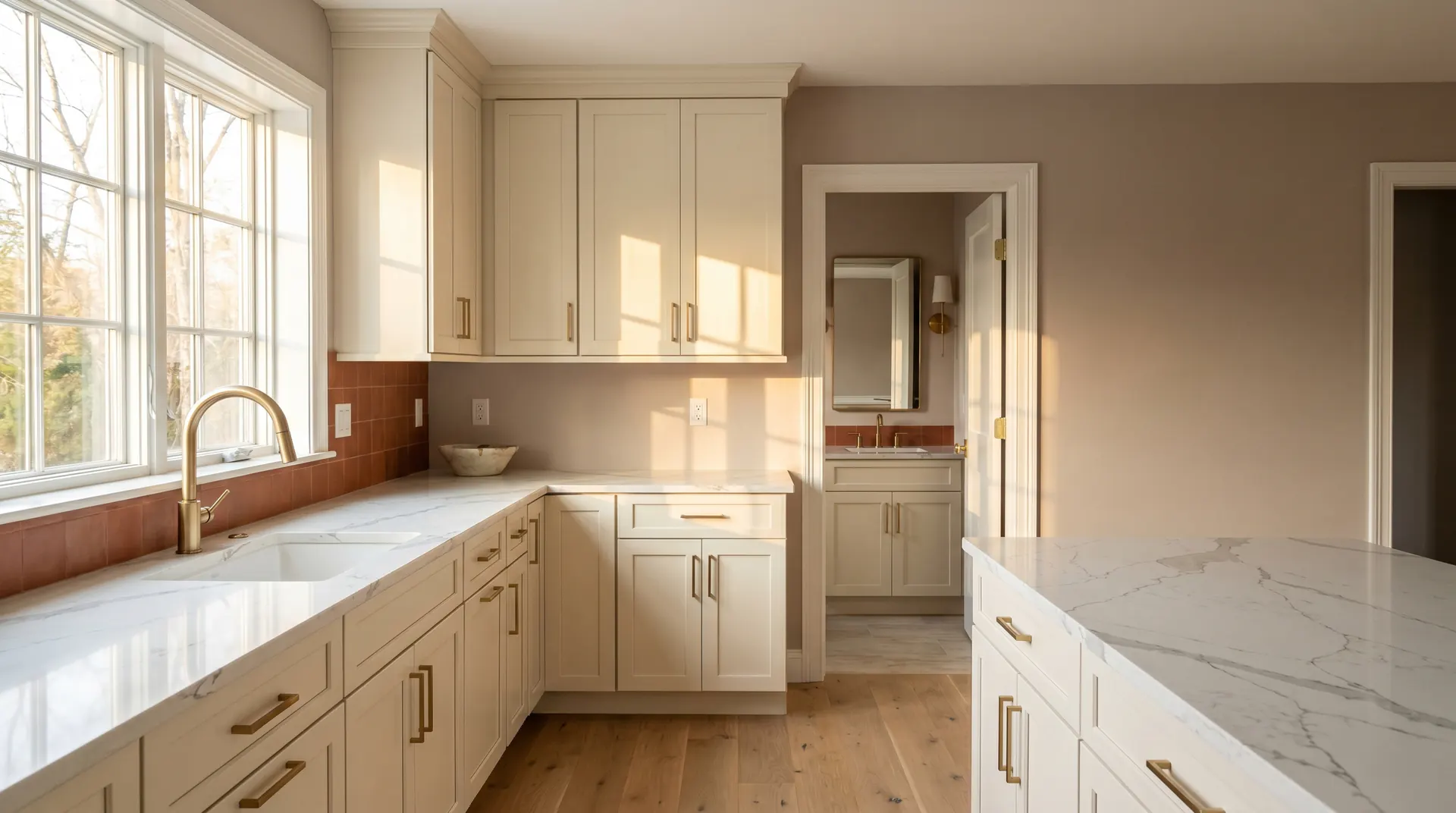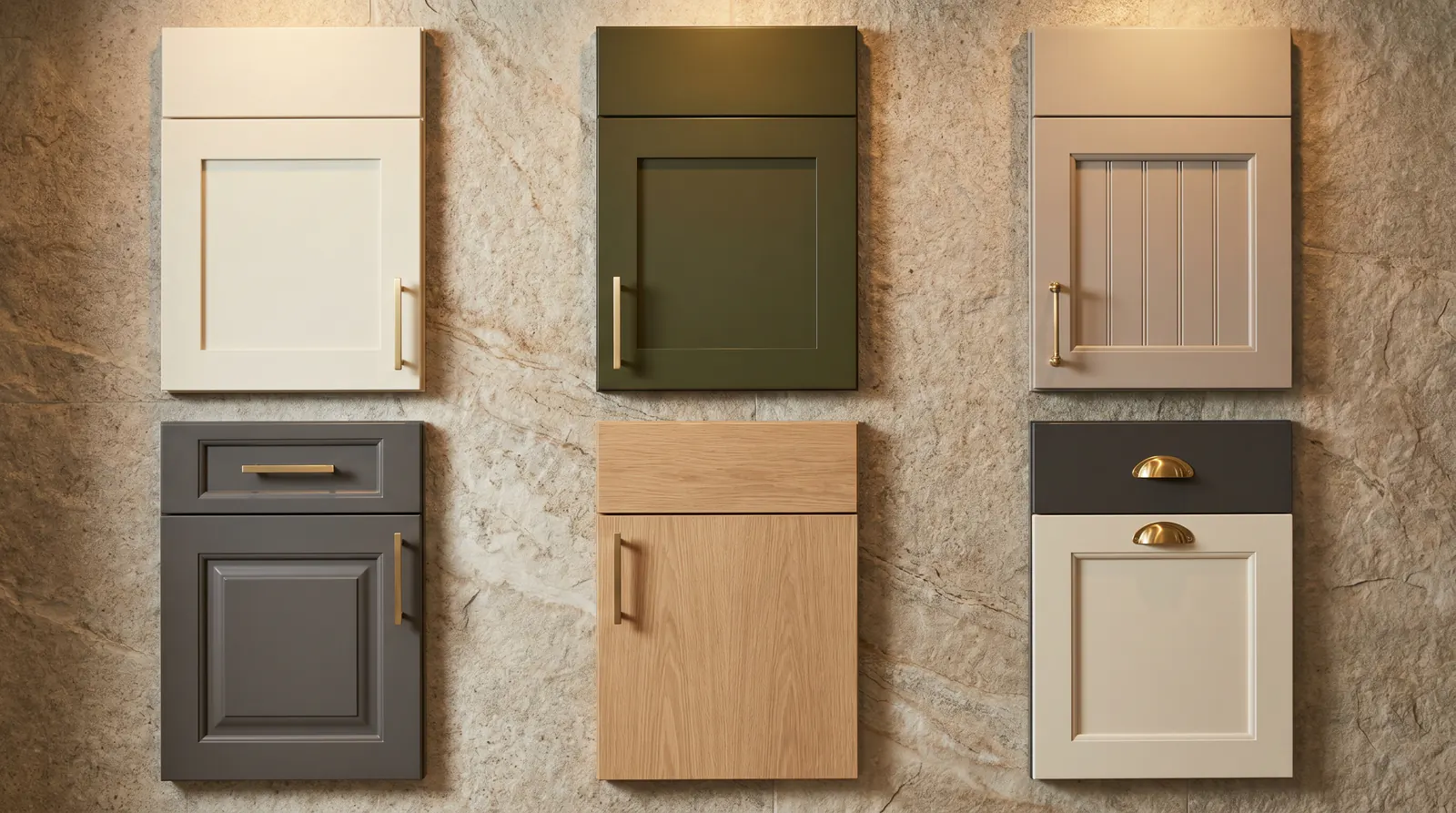
Bergen County is dense, varied, and full of overlapping renovation conversations. From pre-war singles in Hackensack and Teaneck to mid-century split-levels in Fair Lawn and renovated colonials in Glen Rock, kitchen and bathroom decisions in this region are shaped less by trend feeds and more by the rooms homeowners actually live in. This page maps the towns most often represented in projects across our region — with a short note on the housing patterns and design priorities that shape each.
Paramus, NJ — primary area
Paramus is the anchor for this resource. The Route 17 and Route 4 retail corridor brings showrooms, contractors, and homeowners into close proximity, which makes the comparison habit stronger here than in most New Jersey suburbs. Housing stock leans toward postwar singles and renovated transitional homes, with a recurring focus on family-functional kitchens, primary bath upgrades, and storage strategies that compensate for older floor plans. Most Paramus projects land in one of two camps: refresh-scope (cabinet refacing, vanity replacement, tile updates) or full-program remodels with new layouts and surfaces.
Bergen County overview
Bergen County stretches from urban Fort Lee at the GW Bridge to suburban Mahwah at the New York border — a remarkable range of housing eras and price points within a small geographic footprint. Pre-war singles, mid-century splits, postwar capes, center-hall colonials, and contemporary new builds all sit within a 20-minute drive of each other. That means the cabinet line, vanity size, or tile direction that works for one town's housing stock may misread in another. The town notes below collect the recurring patterns we hear from homeowners across the region.
Towns we cover across Bergen County
17 towns · housing stock notes
Ridgewood
Ridgewood is dominated by historic Victorian and Tudor housing stock, with a strong walkable downtown and an established design culture. Renovations here typically balance period architectural detail (millwork, original flooring, fenestration) with modern function — heated bathroom floors, paneled appliance fronts, hidden storage. Inset cabinetry and beaded inset are more common in Ridgewood kitchens than in most of Bergen County.
Fair Lawn
Fair Lawn's housing is largely postwar split-levels and ranches with compact original kitchens and family bathrooms. Most projects here are storage-driven: tall pantries, deep drawers, and primary bath storage upgrades that compensate for the period footprint. Painted Shaker cabinets in cream or warm white and floating vanities in compact bathrooms are recurring directions.
Hackensack
Hackensack mixes pre-war singles, condos, and townhomes — which means projects span small powder room refreshes through full kitchen renovations within blocks of each other. Cabinet refresh and tile work drive most projects, and condo kitchens often face plumbing-stack constraints that limit layout changes. Frameless cabinets and large-format porcelain tile read well in the more contemporary Hackensack stock.
Oradell
Oradell is established colonials and capes with quiet streets and high resale standards. Kitchen remodels here lean toward custom cabinetry programs with longer planning cycles; primary bathrooms typically include double vanities, dedicated walk-in showers, and a freestanding tub when the footprint allows. Painted Shaker, white oak transitional, and inset cabinets are the most common cabinet directions.
River Edge
River Edge homes range from mid-century original to recently renovated. Layout reconfiguration — opening a kitchen to an adjacent dining area, expanding a primary suite — is a recurring ask. Storage strategy matters more here than peak-trend finishes; a well-planned kitchen with a 36-inch single vanity in the primary bath usually outperforms a worse-planned kitchen with a 60-inch double.
Glen Rock
Glen Rock center-hall colonials demand cabinetry that reads architecturally appropriate without freezing the kitchen in time. Painted Shaker in white or warm cream, brass or matte black hardware, and a quiet quartz counter consistently work here. Bathrooms often update toward neutral palettes — large-format porcelain wall tile, simple subway, and floating or floor-mount vanities matched to the home era.
Westwood
Westwood combines walkable downtown housing with mid-century splits in the surrounding neighborhoods. Primary bath upgrades here often go tile-forward — large-format wall tile, mosaic shower floors, and structured ventilation in older bathroom footprints. Kitchens typically refresh with painted cabinet repaints, counter replacement, and updated lighting, with occasional full-program renovations.
Hillsdale
Hillsdale capes and colonials carry tight bathroom footprints and family-shared layouts. Vanity sizing for shared family baths is one of the most recurring planning questions here — a 48-inch single vanity with a wide counter often outperforms a forced 60-inch double in narrower rooms. Kitchen updates typically include painted Shaker cabinets, quartz counters, and classic subway backsplashes.
Tenafly
Tenafly hosts larger homes with full custom kitchen and primary bath programs. Inset cabinetry, integrated paneled appliances, double vanities at 72–84 inches, freestanding tubs, and large-format stone tile feature walls are common directions. Durable, premium finishes are the baseline expectation; trendier accent moves work here when paired with a timeless base palette.
Englewood
Englewood ranges from condos to estate-scale homes — flexibility is the key word. Cabinet and vanity programs need to match each project independently rather than defaulting to one pattern. Powder rooms, family baths, primary suites, and kitchen scopes vary widely, which makes early planning conversations especially valuable here.
Fort Lee
Fort Lee is dominated by high-rise condos and townhomes, where compact kitchens and small-bath optimization carry the project list. Plumbing-stack and HVAC constraints limit layout changes; the leverage is in cabinet program, vanity choice, tile selection, and lighting. Floating vanities, frameless cabinets, and large-format wall tile read strong in this stock.
Teaneck
Teaneck combines pre-war singles with updated colonials. Cabinetry and tile selection lean toward long-term durability — painted Shaker holds up well here, as do sealed natural wood finishes. Bathroom updates frequently address ventilation alongside surfaces; older Teaneck bathrooms benefit from a structural ventilation upgrade as much as from new tile.
Saddle Brook
Saddle Brook is largely postwar singles with tight kitchen footprints. Functional kitchen layout and bath storage are the top priorities here — pull-out pantries, deep drawer banks, and recessed medicine storage in family bathrooms return real daily value. Painted Shaker in white or cream and 30-inch family-bath vanities are recurring directions.
Rochelle Park
Rochelle Park houses modest singles and capes where refresh-scope projects with strong cabinet ROI dominate. Painted cabinet repaints, counter replacement, and updated tile backsplash deliver visible improvement without full demolition. Bathroom refreshes usually focus on vanity replacement, mirror upgrade, and lighting change.
Maywood
Maywood walkable colonial-and-cape neighborhoods often see kitchen and bath updates paired together. Households planning a kitchen renovation frequently bring a primary or family bathroom into the same project — disruption efficiency, contractor scheduling, and visual consistency all benefit from the combined approach.
Lodi
Lodi mixes singles and multifamily housing where durable, family-first kitchen and bath programs make the most sense. Cabinet finishes that hide minor wear (sealed natural wood, lighter painted finishes), porcelain floor tile, and quartz counters are common reliable directions.
Elmwood Park
Elmwood Park postwar housing pairs naturally with vanity sizing decisions and tile-forward bath upgrades. A 36-inch family-bath vanity with a wide counter, a coordinated wall and floor tile palette, and updated lighting usually deliver the most visible daily change.
Northern New Jersey
Beyond Bergen County, this resource also helps homeowners across Northern New Jersey think through kitchen and bathroom decisions before committing to a remodel program. The planning logic does not change much from town to town — the housing stock changes, but the order of decisions (layout, cabinet, surface, lighting) holds across the region.