Kitchen backsplash
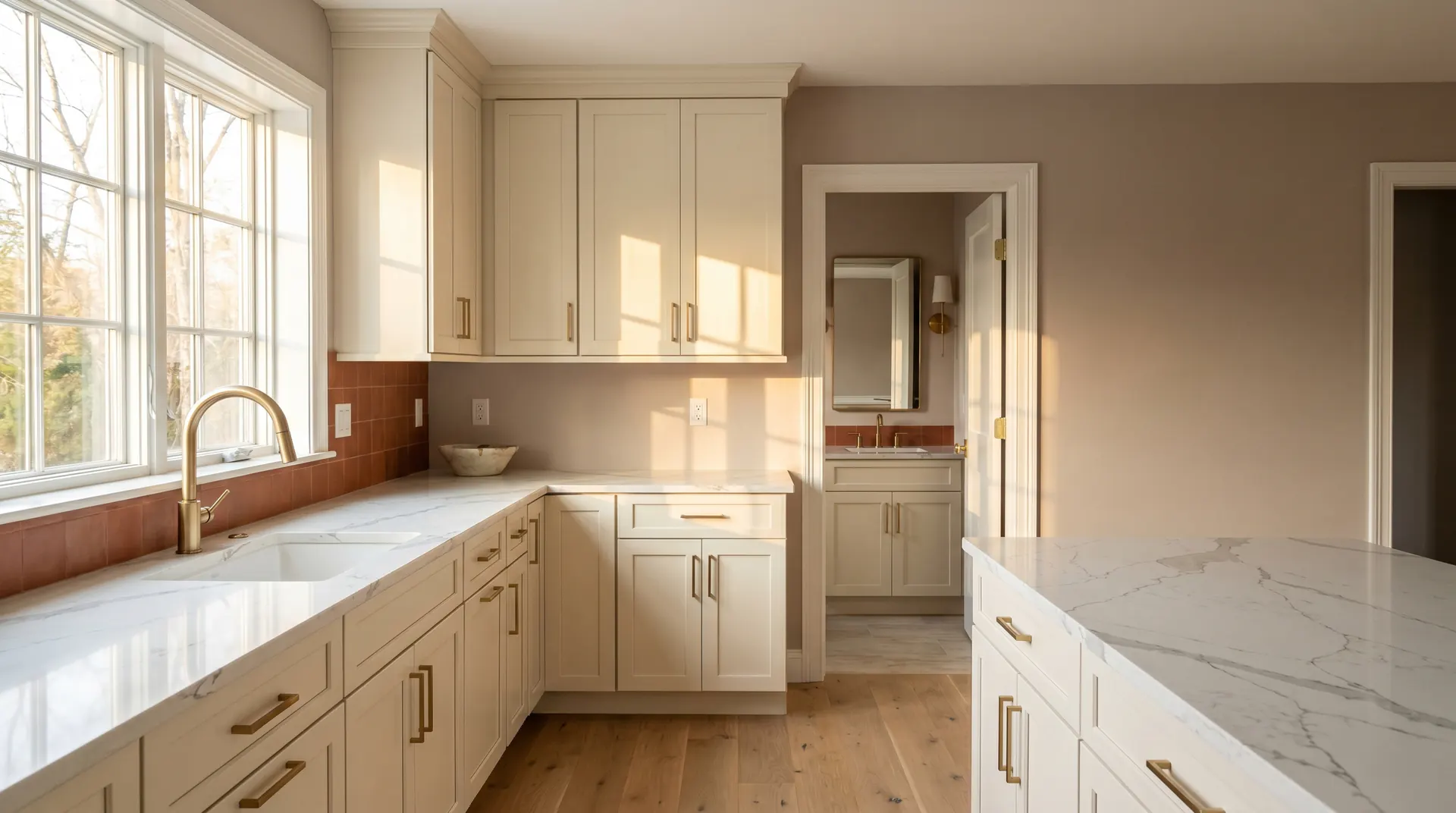
Kitchen backsplash is the surface between the counter and upper cabinets. It is read together with the counter, not in isolation. A patterned counter (heavily veined marble or quartz) reads better with a quiet backsplash; a quiet counter lets a tile pattern lead.
Common reliable directions in Paramus and Bergen County include classic 3x6 subway in white or cream, larger 4x12 or 4x16 subway, handmade-look ceramic, marble or marble-look mosaics, and quiet large-format porcelain panels. Trendier mosaics (geometric patterns, mixed-material) carry more risk of looking dated within five years; use them as accent zones rather than full-wall coverage.
Bathroom wall tile
Bathroom wall tile decisions split between full-height tile (floor to ceiling on every wall), wainscot height (typically 36–48 inches), and feature-wall only. Full-height reads luxurious and durable but raises cost; wainscot is the most common middle path and protects the most splash-prone areas; feature-wall only works when the rest of the room is finished in moisture-tolerant paint. Grout color is a choice on its own — matched grout disappears, contrast grout draws attention to the tile pattern.
Shower tile
Shower tile faces the hardest performance requirements in the bathroom. Tile must be rated for wet-area use; floor tile must offer slip resistance (look for a DCOF rating of 0.42 or higher). Large-format wall tile reduces grout lines (and grout cleaning); small mosaics on shower floors give traction and follow the slope to the drain.
Niche placement should be planned during design — recessed shampoo niches need to land in stud cavities and are framed during construction. Frameless glass enclosures look cleaner but require precise tile installation; semi-frameless and framed enclosures forgive minor tile irregularities and cost less.
Flooring
Bathroom and kitchen flooring options include porcelain tile (most common, durable, water-tolerant), engineered hardwood (kitchens with care, primary baths in some cases), luxury vinyl plank (waterproof, lower cost, less premium feel), and natural stone (beautiful, real maintenance). Heated floors are an upgrade worth budgeting for in primary bathrooms — they pair well with porcelain and stone, and the comfort difference on Paramus winter mornings is significant.
Countertops & coordination
Counters and tile are read together. A busy quartz counter with an equally busy tile pattern competes; a quiet counter lets the tile lead, and a quiet tile lets the counter lead. The reliable rule is to choose only one element to be the visual focus per room. In a kitchen with statement marble counters, the backsplash should usually stay quiet. In a bathroom with bold floor tile, the counter and vanity should usually settle down.
Maintenance
Maintenance behavior is the part of tile selection that gets under-discussed at the showroom and over-discussed at the kitchen sink three years later. Porcelain and ceramic tile are very low maintenance; grout needs periodic cleaning and occasional re-sealing.
Natural stone (marble, limestone, travertine) is beautiful and demands periodic sealing; acidic spills (lemon, wine, vinegar) etch unsealed marble and dull polished surfaces. If the household pattern includes wine, citrus, and casual cleaning, sealed quartz or porcelain will return more long-term satisfaction than marble.
Style mixing
Mixing tile types within a single room is fine — even desirable — when the palette is disciplined. A primary bathroom can carry large-format wall tile, a mosaic shower floor, and a different floor tile if all three sit in the same color family. Trouble arrives when the palette stretches: warm-cream wall tile + cool-gray floor tile + warm-beige shower tile reads accidental rather than designed. Limit the palette; vary the format and texture.
Bergen County tile considerations
Bergen County interiors lean warm and neutral overall — cream, soft white, warm gray, and natural wood remain the dominant base. Tile selections that align with this baseline tend to age well in resale conversations. Strong color choices (deep green, terracotta, cobalt blue) work as accents in feature areas — a powder room wall, a kitchen range hood surround, a shower floor — but rarely justify full-room coverage in this market.
Service area
We help homeowners plan kitchen and bathroom projects across Paramus, Ridgewood, Fair Lawn, Hackensack, Oradell, and River Edge, and the wider Northern New Jersey region.
Common questions
-
What size tile works best for a kitchen backsplash?
Classic 3x6 subway, larger 4x12 or 4x16 subway, and handmade-look ceramic in similar formats are the most reliable kitchen backsplash directions in Bergen County. Larger format porcelain panels read more contemporary; small geometric mosaics (penny round, hexagon, herringbone) add character but date faster than full-field subway. Match the format to the home era and the counter pattern.
-
Is marble tile a good choice for a bathroom shower?
Marble is beautiful and demands real maintenance. Polished marble shower walls require periodic sealing and care with acidic cleaning products; honed marble is more forgiving and shows water spots less. Marble-look porcelain delivers the visual at a fraction of the maintenance footprint and is a strong alternative for households that want the look without the upkeep.
-
What grout color should I choose?
Matched grout — same color as the tile — disappears and lets the tile pattern read as a unified surface. Contrast grout (white tile with dark grout, dark tile with light grout) draws attention to the grid pattern and reads more graphic. For most kitchen backsplashes and bathroom wall installations, matched or near-matched grout ages better and simplifies cleaning visibility.
-
Do I need slip-resistant tile on a bathroom floor?
Yes — bathroom floor tile should carry a DCOF (dynamic coefficient of friction) rating of at least 0.42 for safe wet-area use. Most porcelain floor tile rated for residential bathrooms meets this. Polished stone and very smooth large-format tiles can fail the test; check the rating before specifying anything that might be borderline. Shower floor tile usually goes one step further with mosaic-scale formats for added traction.