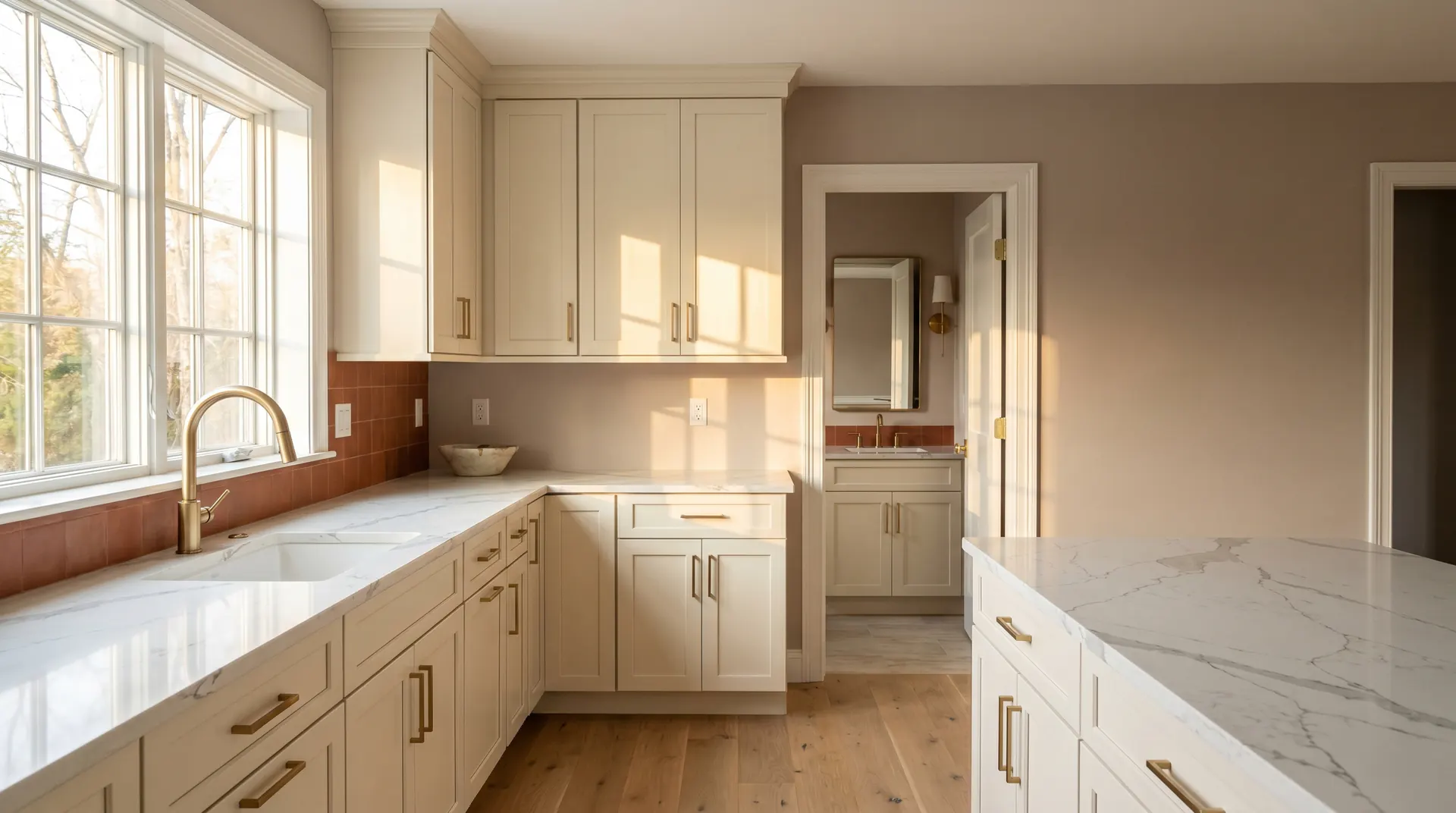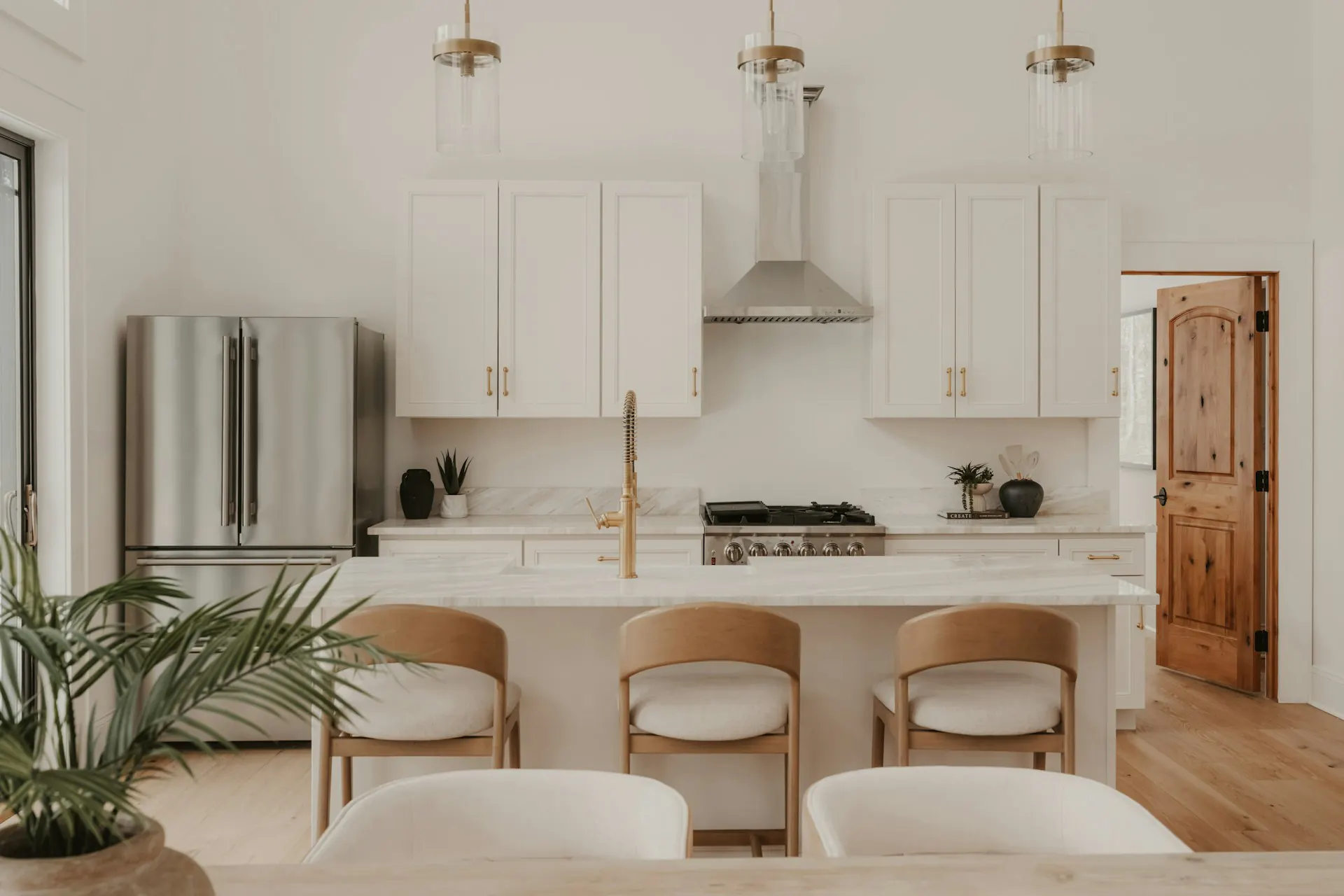
A kitchen showroom visit is most productive when the homeowner arrives prepared. The showroom job is to compare physical samples, validate direction, and translate a plan into specific products — not to invent the plan from scratch. This guide walks through the preparation that turns a showroom visit from a tour into a working session.
What this guide covers
A practical preparation checklist for a kitchen showroom visit in Paramus or Bergen County: what to measure, what to photograph, what inspiration to bring, what budget signals matter, what questions to ask the designer, and how to follow through after the visit.
Why preparation matters
Walking into a showroom cold means the designer has to start from the beginning — what is the room, what is the home, what do you actually want — instead of moving forward from a clear brief. A prepared visit covers ground in two hours that an unprepared visit needs three or four to reach. The difference shows up in how quickly direction crystallizes and how few times you have to come back.
What to measure
Bring rough measurements taken the day before the visit. Specifically:
- Every wall length in the kitchen
- Ceiling height in the kitchen and adjacent rooms
- Height of windows above the counter line
- Door positions and swing direction
- Any obstructions: vents, plumbing chases, electrical panels, radiators, structural columns
Sketch the kitchen in plan view on a single sheet of paper with the measurements written on it. The sketch does not need to be to scale; it needs to be readable.
What to photograph
Photos do more than measurements alone. Bring images of:
- Every wall in the kitchen, full wall, top to bottom of cabinets
- The current kitchen from the entry point that visitors see first
- Adjacent rooms that connect to the kitchen
- Any architectural detail that the new kitchen needs to coordinate with (existing trim, adjacent cabinetry, hallway flooring transition)
Phone photos are fine. Showroom designers work from these constantly.
Storage problems to document
The single most useful preparation item is a written list of storage problems the current kitchen has. Walk the kitchen with a notepad and write down:
- Cluttered drawers — which drawers, what is in them
- Awkward corner cabinets — what is stored there now, what should be
- Pantry overflow — what is the household actually storing that does not fit
- Counter clutter — what items live on the counter because there is no cabinet home
- Daily-use items that are hard to reach
- Appliances that block traffic patterns
This list drives the cabinet accessory conversation and often reveals layout problems that the household has been quietly working around for years.
Style direction
Even a loose direction helps. Decide whether you are leaning toward:
- Shaker (the default for most home eras)
- Slab (for contemporary renovations)
- Inset (for historic or high-end traditional homes)
- Raised panel (for traditional and classical homes)
You do not need to commit. The showroom designer can refine direction once you arrive, but a loose lean — even “we like Shaker, probably painted, leaning warm white” — is much more workable than a blank slate.
Bring three to six inspiration photos that capture the direction. Pinterest screenshots, magazine pages, photos taken in friends’ kitchens — anything that communicates the feel. More than six photos becomes harder to discuss in a single visit.
Non-negotiables
List anything that is locked in advance. Common items:
- Appliance brand or specific model (paneled fridge, induction cooktop, double oven, microwave drawer)
- Specific layout requirement (island present, peninsula, no upper cabinets on a particular wall)
- Counter material commitment (we want quartz; we want marble)
- Lighting requirement (under-cabinet lighting, statement pendant)
Non-negotiables narrow the discussion and prevent the designer from showing options that will not work.
Budget range
You do not need an exact budget, but you should arrive with a realistic range. A 20,000 dollar window — even a 30,000 dollar window — helps the designer narrow which cabinet lines and counter materials make sense to discuss. Walking in with no number leads to a tour of every option, which is overwhelming and rarely productive.
Be honest with yourself about the range. The cheapest line that meets the look is rarely the right answer; the most expensive line is rarely necessary. The middle is usually where Bergen County homeowners land.
Timeline target
Bring a timeline window. When do you want demolition to start? When does the kitchen need to be usable again — before a holiday, before school starts, before guests arrive? The timeline shapes which cabinet lines fit (some have shorter lead times than others) and how the contractor needs to sequence the project.
Samples to coordinate
Bring physical samples of any finishes the new kitchen has to coordinate with:
- Existing flooring if it stays
- Adjacent cabinetry (built-ins, mudroom cabinets) if they stay
- Pendant fixtures already chosen
- Hardware already chosen
Showroom designers can color-match better than memory does.
Questions to ask the designer
A short list of questions worth asking on the first visit:
- Which cabinet lines work well in homes of my era?
- What is the realistic lead time on the line we are leaning toward, today?
- What is the cabinet construction — framed or frameless — and why is that the right call here?
- How does the cabinet finish hold up over five to ten years of family use?
- What soft-close hardware is included, and what is upgraded?
- What accessories actually return value for how my household uses the kitchen?
- What is the typical regret you see from Bergen County homeowners after a year?
Question seven is the most useful. A designer who has worked with hundreds of local homeowners has a clear answer.
After the visit
Take the visit notes and inspiration narrowed during the appointment back home. Walk the kitchen one more time with the new direction in mind before scheduling the second visit. The second visit is usually where decisions get locked in; the first visit is where direction crystallizes.
For the broader cabinet decision algorithm, see how to choose kitchen cabinets. For the project context, see kitchen remodeling planning. For style by home era, see Bergen County cabinet styles.
When you are ready
When the prep is in shape — measurements, photos, storage problem list, style direction, budget range, timeline, samples in hand — the showroom visit will move much faster. Continue with Anve Kitchen and Bath in Paramus to compare cabinet samples and counter slabs in person.