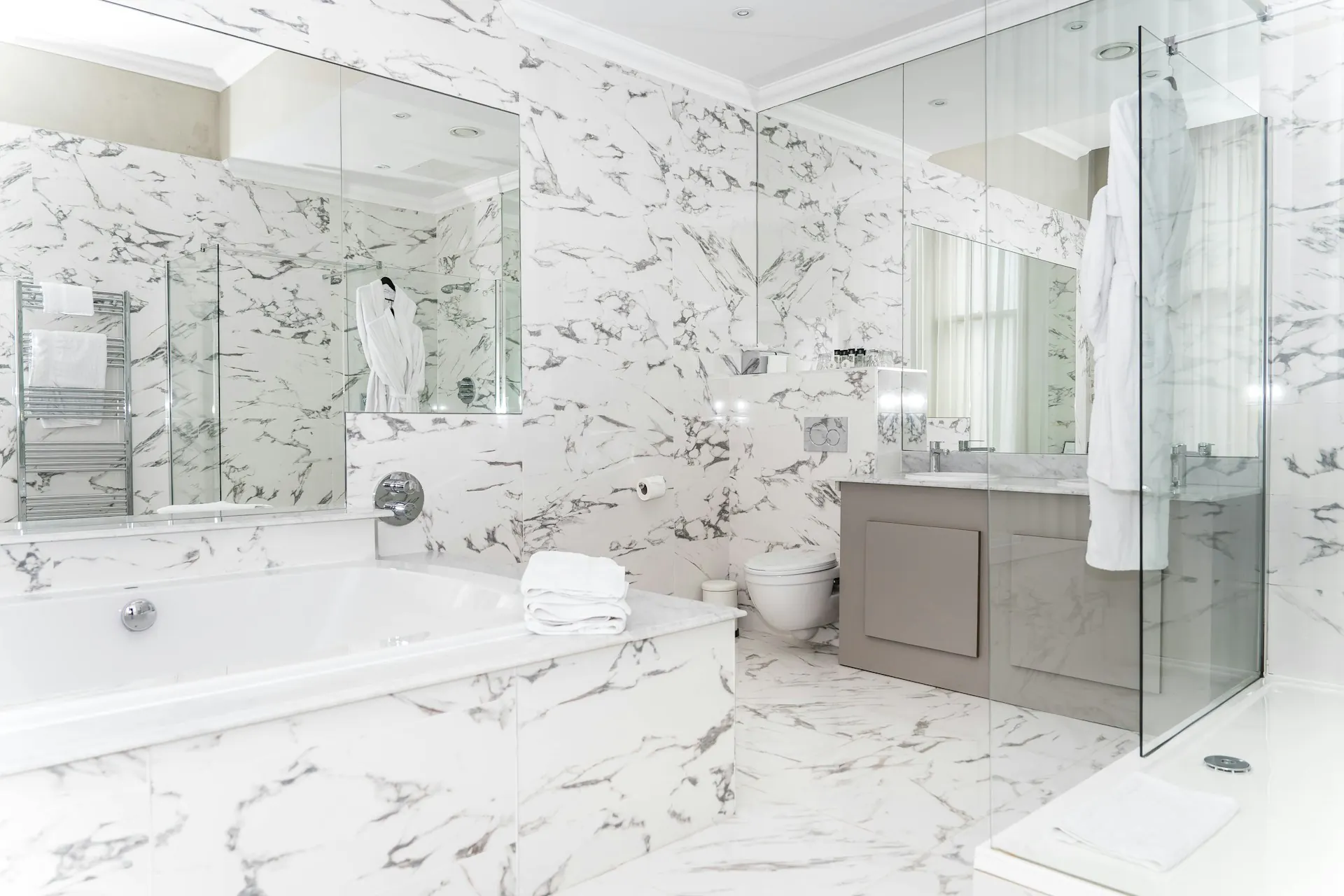
Bathroom remodeling in Paramus and the surrounding Bergen County towns is a different exercise than kitchen remodeling. The room is smaller, every surface is wet at some point, plumbing is more constrained, and the failure modes — water damage, ventilation problems, waterproofing shortcuts — are unforgiving. Done well, a bathroom remodel is one of the highest-value projects in a Bergen County home; done in a hurry, it is also one of the easiest to regret.
What this guide covers
This guide walks through the planning phases of a bathroom remodel: scope, budget, timeline, plumbing constraints, ventilation, layout decisions, the tile-first vs vanity-first sequencing question, and how Bergen County housing context shapes the right approach.
Where to start: scope and plumbing
Begin by locking the scope. A refresh keeps fixtures in place, replaces the vanity, updates tile and lighting, and leaves the shower or tub footprint alone. A full program redraws the layout, may move plumbing, and rebuilds the shower or tub from the framing up. The two are different projects with different budgets and timelines.
Plumbing is the single biggest cost lever in a bathroom remodel. Reusing the existing wet-wall positions — toilet, sink, shower or tub — keeps the project budget-friendly and faster to complete. Moving them adds real cost and project time. The question is not whether moving plumbing is allowed; it is whether the existing layout is genuinely broken or merely unfamiliar.
Setting a budget that holds
Bathroom remodel budgets vary widely by scope. Powder room refreshes sit at the low end. Full primary bath programs with custom vanity, large-format tile, frameless glass shower, and ventilation upgrades sit much higher. The contingency benchmark for bathrooms is 15 to 20 percent on top of the base, higher than kitchens because bathrooms uncover more surprises.
Older Hackensack pre-war homes, Paramus pre-1970 singles, and Fair Lawn split-levels routinely reveal hidden conditions during demolition: deteriorated waterproofing behind tile, undersized vent stacks, retired plumbing, or framing damage from past slow leaks. The contingency exists for those discoveries.
Realistic timeline
A primary bathroom remodel typically runs:
| Phase | Typical duration |
|---|---|
| Planning and design | 2–4 weeks |
| Vanity, tile, fixture ordering | 3–8 weeks (varies) |
| Demolition through rough trades | 1 week |
| Waterproofing, tile, install through finishes | 3–6 weeks |
| Punch list and closeout | 1 week |
Custom vanity programs and large mirrors are the items most likely to extend the schedule. Order them early.
Layout decisions: tile-first vs vanity-first
In a primary bathroom where tile carries the room, tile-first sequencing usually works best — pick the field tile, accent tile, shower mosaic, and floor direction together, and let the vanity finish coordinate to that palette. In a compact bathroom or powder room where the vanity dominates the visual budget, vanity-first is more effective: pick the vanity finish and counter, then build the tile palette to support it.
Either way, the cabinet (vanity) finish, counter material, tile palette, and metal finish family on plumbing and hardware all need to be settled before ordering. Trying to pick a faucet before the vanity counter is chosen is a common cause of rework.
Ventilation: the upgrade that pays back
Older bathrooms in Bergen County — particularly in Hackensack, Fair Lawn, and Paramus pre-1970 homes — often have undersized or aging ventilation. A remodel is the right time to upgrade, because walls are open and routing to the exterior is straightforward. Proper ventilation protects tile, grout, vanity finish, and paint from the long-term moisture damage that shortens the life of an otherwise well-built bathroom.
Pair the ventilation upgrade with a humidity-sensing switch or a timer; manual fans are the ones that get left off when they matter most.
Waterproofing: where corners get cut
The shower waterproofing detail is the part of a bathroom remodel that homeowners cannot inspect after the fact and cannot easily redo. A contractor who treats waterproofing as an afterthought — relying on backer board alone, skipping membrane at corners and curbs, using inadequate sealant at penetrations — is the contractor whose work shows up as a problem two to five years later.
Ask any prospective contractor exactly what waterproofing system they use behind tile and at the shower pan. The answer should be specific (a sheet membrane, a liquid membrane, a tested system), not vague.
Plumbing fixtures and the finish family
Plumbing fixtures — faucets, shower trim, towel bars, robe hooks — should land in a single coordinated finish family across the bathroom. Mixing finishes is fine when done deliberately (matte black accent against a brushed nickel base), but unintentional mixing reads as oversight. Decide the finish direction during planning, not at the showroom.
Bergen County housing context
Bergen County bathrooms vary by home era. Tenafly and Englewood center-hall colonials often have larger primary baths that support double vanities and structural shower rebuilds. Fair Lawn split-levels and Paramus singles typically have compact bathrooms where vanity sizing and tile discipline matter more than expansion. Hackensack pre-war homes reward keeping period-appropriate proportion — a wide single vanity often reads more correctly than a forced double. Ridgewood, Glen Rock, and Oradell properties span the range.
For tile selection direction, see the tile ideas guide. For vanity sizing, see vanity sizes and layouts. For the specific buying decision, see how to choose a vanity. To prepare for product selection, use the bathroom showroom visit checklist.
What bathroom remodeling typically costs in Bergen County
Bathroom remodel cost is one of the harder numbers to pin down up front because the room is small enough that a single decision — vanity tier, tile coverage, shower glass, plumbing relocation — can move the budget significantly relative to the total. Recent regional remodeling cost data places Bergen County bathroom projects consistently above national medians, with the same labor and logistics premium that affects kitchen work in the New York metropolitan area.
A useful planning frame is three bands by scope. Powder-room and refresh-scope projects — replacing the vanity, swapping the toilet, updating the mirror and lighting, sometimes replacing floor tile while keeping plumbing in place — sit at the lower end of regional data. They deliver visible upgrade with limited demolition. Mid-program family bath projects — full vanity replacement, new tile on shower walls and floor, fixture replacement, sometimes structural ventilation upgrade — run meaningfully higher, with the spread driven by tile coverage, vanity tier, and shower glass selection. Full-program primary bath projects — redrawing the layout, custom or premium vanity, large-format wall tile, frameless glass shower, freestanding tub, ventilation and electrical upgrades, possibly heated floors — sit at the top of the band, often several multiples above a refresh.
The variables that move bathroom cost the most are vanity tier (stock, semi-custom, custom — Anve’s local 2-week custom program covers non-standard widths cleanly), tile coverage and material (porcelain plank, large-format ceramic, natural stone, mosaic accents), shower glass (framed, semi-frameless, frameless), and any plumbing relocation. The contingency line for bathroom projects runs higher than kitchens — typically 15 to 20 percent — because bathrooms uncover more surprises behind tile and walls: deteriorated waterproofing, undersized vent stacks, hidden slow leaks, framing damage. Older Hackensack pre-war homes, Paramus pre-1970 singles, and Fair Lawn split-levels routinely surface conditions that only become visible after demolition.
The path from a band to a real number is the same as kitchens: showroom selection pins down the vanity, tile, and fixtures; a contractor walkthrough covers labor and identifies any structural questions; the contingency line covers what demolition uncovers. The band gives you direction; the number comes from the work.
When you are ready
When the plan is in shape — scope clear, plumbing decisions made, budget set with contingency, ventilation and waterproofing addressed in the brief — the next step is product selection in person. Continue with Anve Kitchen and Bath in Paramus to compare vanities, tile, and fixtures from the lines covered across this site.