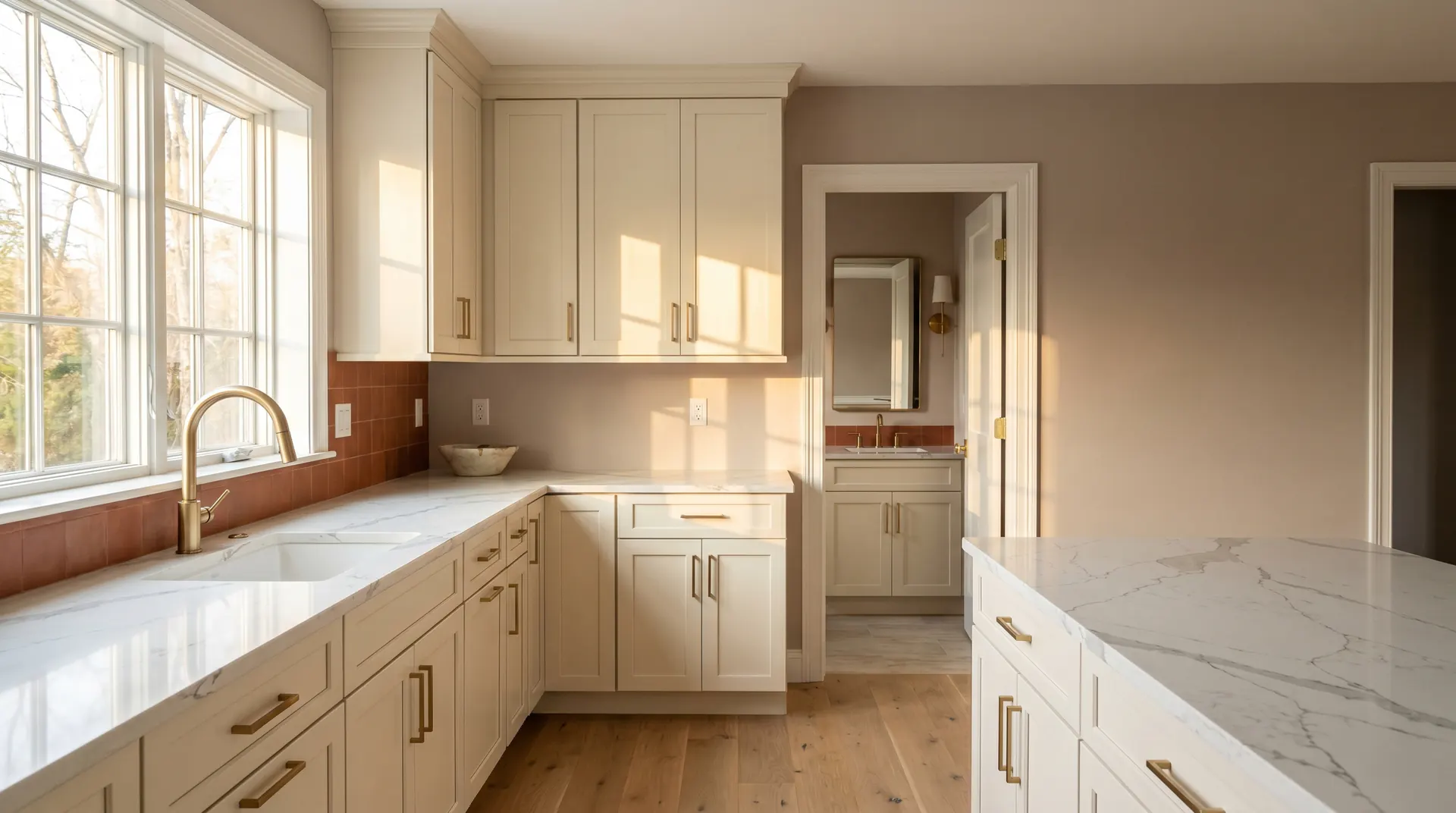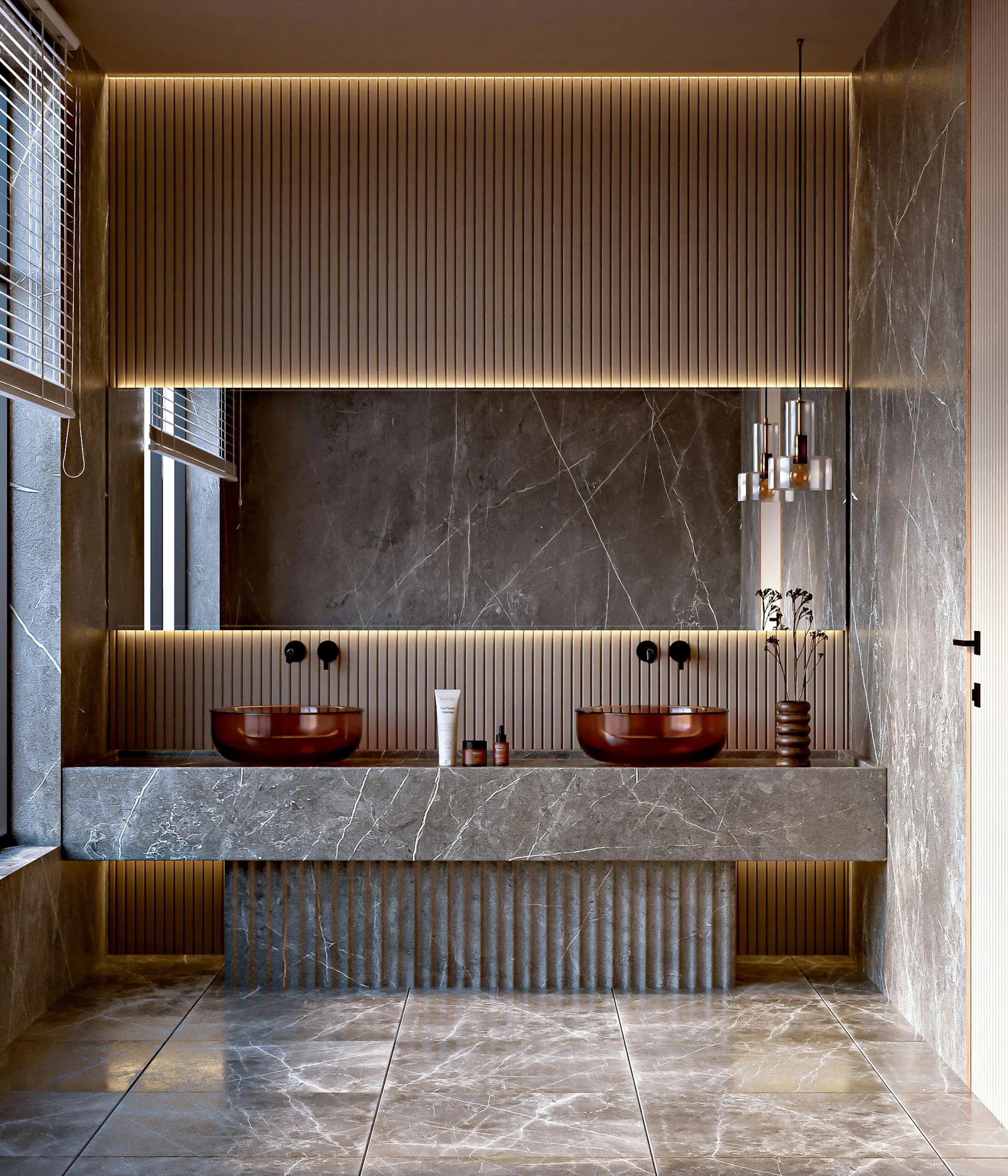
A bathroom showroom visit covers more material categories than a kitchen visit, even though the room is smaller. Vanity, counter, sink, tile field, shower wall tile, shower floor mosaic, accent tile, plumbing fixtures, mirror, lighting, and hardware all need to coordinate. Preparation is what keeps a productive visit from becoming an overwhelming one.
What this guide covers
A practical preparation checklist for a bathroom showroom visit in Paramus or Bergen County: what to measure, what to photograph, plumbing notes that matter, tile direction prep, budget signals, questions to ask the designer, and how to follow through after the visit.
Why preparation matters
Bathroom showroom visits without preparation tend to spread thin across too many categories at once. A prepared visit narrows the conversation: vanity sizing is settled within minutes, tile palette converges around a clear direction, and the second half of the visit is spent comparing actual samples instead of debating fundamentals.
What to measure
Bring rough measurements taken the day before the visit:
- Each wall length in the bathroom
- Ceiling height
- Position of the door swing relative to fixtures
- Window position and size, if any
- Any obstructions: radiators, knee walls, soffits, structural columns
Sketch the bathroom in plan view on a single sheet of paper. Mark the position of the toilet, sink, and shower or tub on the sketch.
What to photograph
Photos give the designer context that measurements alone do not:
- Each wall, full wall, multiple angles
- The existing shower or tub from inside the room
- The current vanity, including the cabinet interior if storage is part of the brief
- The ceiling, if there is a vent fan or any architectural detail
- Adjacent rooms that connect to the bathroom
Phone photos are fine. Bring more than feels necessary; the designer will use them.
Plumbing positions
Note the position of the toilet, sink, and shower or tub on the wall sketch. Moving plumbing adds significant cost and project time, so the designer needs to know what the existing wet-wall layout looks like before discussing potential changes.
For each fixture, note:
- Which wall the supply lines come from
- Whether the existing vent stack runs through that wall
- Whether the floor structure runs perpendicular or parallel to the planned shower or tub
Most bathroom remodels in Bergen County keep existing plumbing positions to control budget. The exceptions are remodels where the existing layout actively works against daily use — and even then, the designer needs to know the constraints before recommending a layout change.
Storage problems to document
Walk the bathroom with a notepad and write down storage problems:
- Medicine clutter — what is currently stored, what is missing a home
- Towel storage — where do towels live, where should they
- Daily-use items — toothbrush, hair tools, makeup
- Cleaning supply storage
- Linen overflow
This list drives the vanity drawer configuration, medicine cabinet decision, and any built-in linen storage.
Tile and vanity direction
Even a loose direction helps. Decide whether you are leaning toward:
- A light palette (white tile, light vanity, warm or cool tone)
- A warm palette (cream tile, wood-finish vanity, brushed brass or unlacquered fixtures)
- A contemporary palette (large-format porcelain, slab vanity, matte black or polished chrome)
- A historic palette (subway tile, marble accent, traditional vanity, polished nickel)
Bring three to six inspiration photos. Pinterest screenshots, magazine pages, photos from friends’ bathrooms. The photos communicate direction more efficiently than words.
Tub or no tub
Decide before the visit whether the project will keep the tub, drop it, or rebuild around a freestanding tub. The decision shapes the layout, the tile budget, and the plumbing scope.
For primary bathrooms in homes with another full bath in the household, dropping the tub for a generous walk-in shower is increasingly common. For family bathrooms shared with children, keeping a tub almost always wins.
Budget range
A 10,000 dollar window helps the showroom designer narrow which vanity lines, tile ranges, and fixture brands make sense to discuss. Powder room budgets sit at the low end; full primary bath programs with custom vanity, large-format tile, frameless glass shower, and ventilation upgrades sit much higher.
Timeline window
Bring a timeline window. Custom vanities and large mirrors are the items most likely to extend the schedule. A primary bath remodel typically runs four to eight weeks of contractor time once demolition starts; the full project from first showroom visit lands between two and four months.
Samples to coordinate
Bring physical samples of any finishes the new bathroom has to coordinate with:
- Hallway flooring outside the bathroom
- Paint colors that will continue from adjacent rooms
- Hardware finishes elsewhere in the home (the bathroom does not have to match, but the home should read coherently)
Questions to ask the designer
A short list worth asking on the first visit:
- Which vanity lines work well in primary bathrooms of my home era?
- What is the realistic lead time on the line we are leaning toward, today?
- What is the custom vanity build window if the wall length does not match a catalog width?
- What countertop materials hold up best for daily-use bathrooms?
- What tile sealing and maintenance does the recommended palette require?
- How does the showroom approach shower waterproofing detail?
- What ventilation upgrade do you typically recommend for older Bergen County homes?
- What is the typical regret you see from Bergen County homeowners a year or two after a bathroom remodel?
Question eight is the most useful. The answer reveals where corners commonly get cut and where it pays to budget more.
After the visit
Take the direction narrowed during the visit back home. Walk the bathroom one more time with the new direction in mind. Pull out a few candidate vanities and tile palettes from the showroom paperwork and live with them for a couple of days before scheduling the second visit.
For the broader vanity decision algorithm, see how to choose a bathroom vanity. For the project context, see bathroom remodeling planning. For tile direction, see tile ideas.
When you are ready
When the prep is in shape — measurements, photos, plumbing positions, storage problem list, vanity and tile direction, budget range, timeline, samples in hand — the showroom visit will move much faster. Continue with Anve Kitchen and Bath in Paramus to compare vanity samples, tile, and fixtures in person.